Publié le lundi 1 décembre 2025
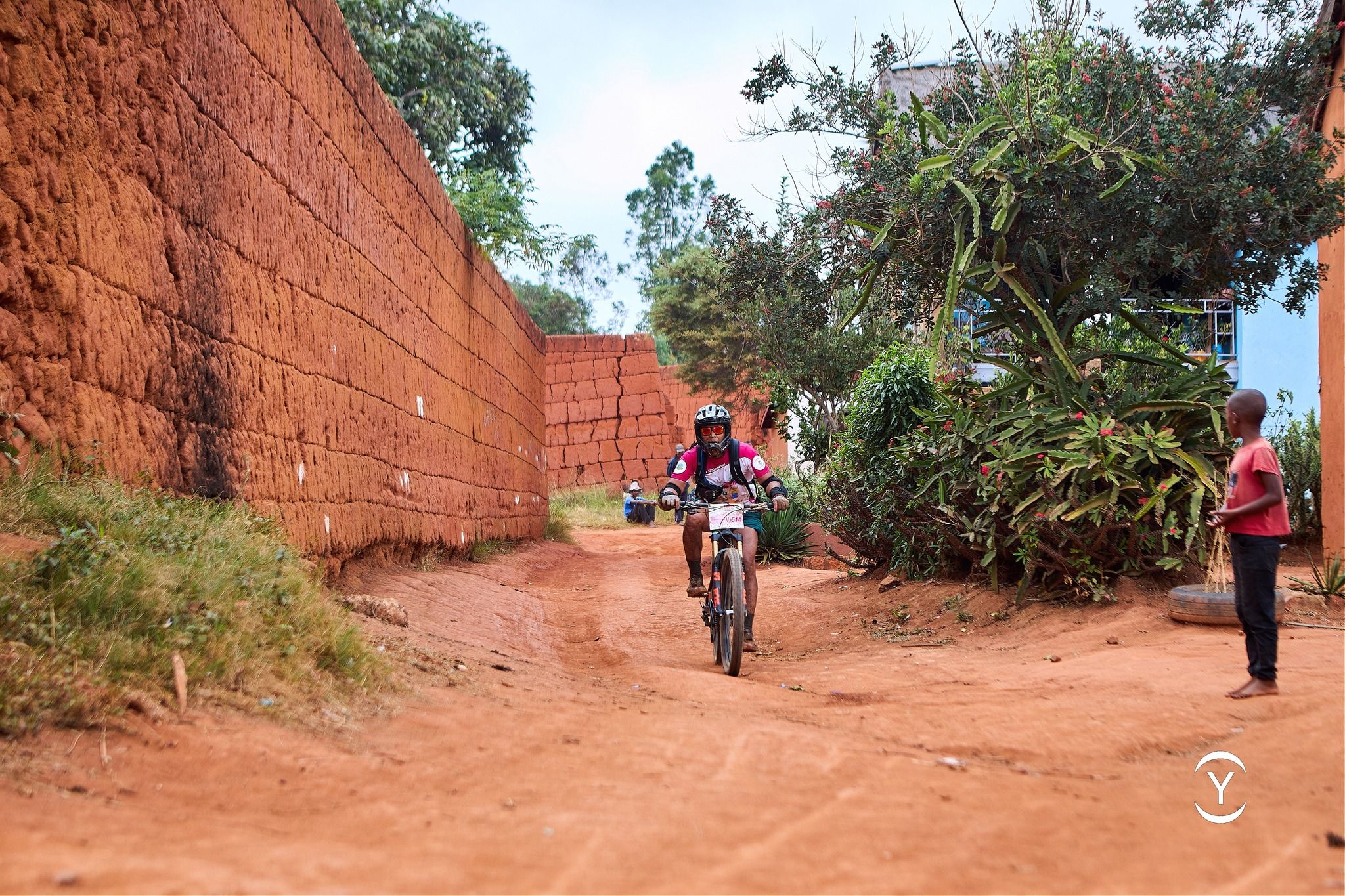
The dust hung in the air like a veil of red silk, stirred by tires that had long since given up pretending to be civilized. In the shadow of the Great Wall of Wa—that endless, sun-baked barrier of mud bricks and forgotten histories—Esi pedaled harder, her carbon frame whispering secrets to the earth. It was day three of the Harmattan Rally, a beast of a race that chewed up expatriate cyclists and spat them out with sunburns and stories no one back home would believe. But Esi? She was born to this. Kente cloth woven into her jersey's sleeves, a helmet scarred from last year's spill into a baobab grove, and eyes that had mapped these trails before she could walk.
The path wasn't a trail so much as a suggestion—a rutted vein of ochre soil snaking between villages where goats roamed freer than the wind. To her left, the wall rose like a sunburnt sentinel, its cracks home to lizards that flicked tongues at the intruders. To her right, the world softened: bougainvillea spilling over compound walls in riots of pink and fuchsia, frangipani trees heavy with blossoms that smelled of rain that never came this season. A boy—no more than eight, barefoot and grinning with the mischief of one who knew every shortcut—watched from the shade of a dragon tree, its spiky arms outstretched like it was begging for mercy. He held a deflated football under one arm, the kind patched so many times it was more memory than leather. Behind him, an old tire swing dangled from a neem branch, swaying lazily as if the heat had lulled it to sleep.
She shifted gears, the chain snapping like a whipcrack in the humid hush. Thirty kilometers out from Ouagadougou, and the field had thinned: the French tourers with their GPS units and gel saddles had peeled off at the first water point, muttering about "authenticity" over electrolyte tabs. The locals, though—men and women from the Mossi heartlands, astride steel frames bought secondhand from market stalls—stayed glued to her wheel. There was Kofi, the wiry mechanic from Bobo-Dioulasso, his singlet soaked through and his smile a permanent fixture, like he'd pedaled out of a dream. And Mama Awa, sixty if she was a day, her calves like braided ropes from years of pounding millet, drafting effortlessly on a bike older than Esi herself.
The sun clawed its way higher, turning the sky to hammered brass. Esi's bidon was half-empty, the water inside tasting of chlorine and regret, but she rationed it sip by sip, letting the rhythm of the cranks hypnotize her. Up ahead, the trail dipped into a dry riverbed, where acacias clawed at the sky and the ground turned to talcum powder that coated everything in a fine, unforgiving grit. This was the Devil's Crossing, they called it—a deceptively flat stretch that hid roots like landmines and sand traps deep enough to swallow a wheel whole. Last year, a Kenyan pro had gone down here, cracking his collarbone on a baobab knee. Esi had helped carry him out, singing old highlife tunes to keep the pain at bay.
She leaned into the bars, feeling the familiar burn bloom in her quads, that sweet ache like embers under skin. The boy by the wall waved now, his shout cutting through the cicada drone: "Allez, grande sœur! Show them the fire!" She laughed, a bark of sound that echoed off the bricks, and waved back with one gloved hand. In that moment, the race dissolved. It wasn't about the podium in the capital, with its podium girls and sponsor banners fluttering like false promises. It wasn't the Strava segments or the carbon savings or the podium spray of palm wine that tasted like victory and regret in equal measure.
No, this was deeper. This was the pulse of the land syncing with her heartbeat, the way the Harmattan wind carried whispers of ancestors who'd traversed these same paths on foot, herding cattle or fleeing storms. It was the community stitched into every pedal stroke: the women in the villages who'd slip her a handful of roasted groundnuts at dawn aid stations, their laughter a balm against the loneliness of the long hauls. The kids like the one watching now, who dreamed of bikes not as luxuries but as wings—tools to chase horizons beyond the compound walls.
They hit the riverbed at speed, wheels churning sand into rooster tails that painted their backs like war paint. Kofi surged ahead, whooping as he bunny-hopped a root cluster the size of a man's thigh. Mama Awa stayed steady, her breathing a metronome, teaching without words: pace yourself, child; the trail gives nothing for free. Esi followed, threading the needle between a thornbush and a half-buried termite mound, her tires finding purchase where others would falter. The air thickened with the scent of dust and distant cooking fires—maybe jollof rice simmering in clay pots, or attiéké steaming under banana leaves.
By midday, the heat was a living thing, pressing down like a hand on your chest. They crested a rise, and there it was: the midpoint oasis, a cluster of mango trees around a borehole pump where volunteers in faded race tees pumped water into battered jerry cans. Esi coasted to a stop, legs jelly beneath her, and accepted a bowl of millet porridge laced with shea butter, the warmth seeping into bones she'd forgotten were cold. The boy from earlier had materialized somehow—must've run the parallel path—and pressed a woven bracelet into her palm, red and black threads knotted with intention. "For speed," he said, eyes serious as a contract.
She tied it around her wrist, the fibers rough against her pulse, and felt the miles yet to come settle like old friends. Eighty more kilometers to the finish, through savanna that blurred into mirage and villages alive with drumbeats at dusk. There'd be mechanicals—a snapped chain in the dark, maybe, or a puncture from the omnipresent goat heads. There'd be moments of doubt, when the sun dipped low and the shadows grew long, whispering that home was a bed and a fan, not this endless red ribbon unspooling under her wheels.
But then she'd glance at the bracelet, feel the ghost of that boy's grin, and remember why she chased this madness. Trails like these weren't just dirt and distance; they were lifelines, connecting the sweat of today to the stories of tomorrow. They turned strangers into squad, pain into poetry, and a simple dirt path into a cathedral where the only sermon was the one your body preached.
As the group remounted, chains rattling like applause, Esi clipped in and pushed off. The wall receded behind them, the boy a speck waving farewell. The Harmattan Rally wasn't over—not by a long shot. But in the quiet spaces between breaths, Esi knew: every turn of the crank was a verse in the song of home, sung loud enough to echo across the Sahel. And damn if it didn't sound like freedom.